
How to Spot a Fake Concrete Molcajete (Real vs. Fake Molcajete Guide)
- Unleash Authentic Flavors with a Genuine Molcajete
- Why You Must Avoid a Fake Molcajete (The Health Risks)
- Real vs Fake Molcajete: 7 Foolproof Tests
- Where Does an Authentic Molcajete Come From?
- You Bought the Real Deal. Now What? (How to Cure It)
- The Verdict: Authentic Volcanic Rock vs. Fake Concrete
- Frequently Asked Questions (FAQ)
Tired of bland flavors and questionable kitchen tools? Discover the authentic molcajete experience and elevate your culinary creations to new heights.
Unleash Authentic Flavors with a Genuine Molcajete
Quick Verdict: The molcajete is a hand-carved, volcanic rock grinding bowl that infuses authentic flavors through its porous surface. Its exceptional craftsmanship and health-assured materials make it ideal for serious home cooks and professional chefs seeking to elevate their culinary creations.
- Authentic Craftsmanship: Hand-carved from volcanic rock for unparalleled performance and durability.
- Superior Flavor Infusion: Porous surface grinds spices and herbs to perfection, releasing maximum aroma and taste.
- Health & Safety Assured: Avoid harmful concrete fillers found in cheap imitations, ensuring pure, untainted ingredients.

We independently research, test, review, and recommend the best products. If you buy something through our links, we may earn a commission.
Why You Must Avoid a Fake Molcajete (The Health Risks)
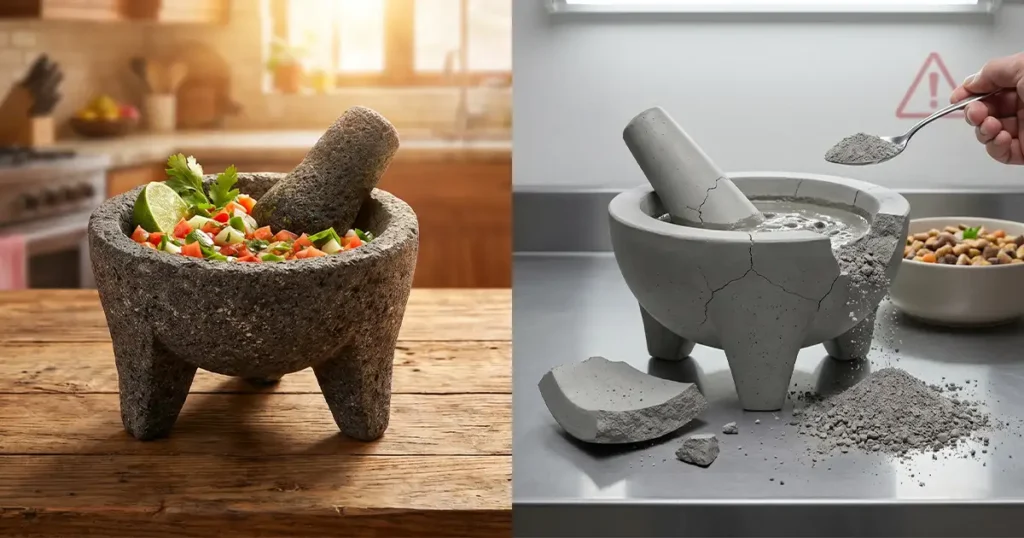
An authentic molcajete is painstakingly hand-carved from 100% natural volcanic rock, specifically vesicular basalt. Replicas, on the other hand, are mass-produced by pouring a wet mixture of cement, sand, and gravel into industrial molds.
The primary danger comes from friction. When you grind ingredients in a concrete bowl, the material breaks down, lacing your guacamole or salsa with toxic dust and grit. Medical professionals warn that ingesting concrete fragments and silica dust can cause severe internal irritation and long-term digestive complications. It isn't just about preserving culinary tradition; it is a matter of basic food safety.
Real vs Fake Molcajete: 7 Foolproof Tests
To ensure you are investing in the real deal and keeping your kitchen safe, put your stone to the test using these seven foolproof methods.
1. The Geologist’s Acid Test
This is the ultimate, definitive test recommended by geologists. Place a few drops of an acidic liquid—like muriatic acid or even hot white vinegar—inside the bowl.
- If it’s a fake molcajete: The acid will react with the alkaline cement, immediately forming visible gas bubbles.
- If it’s volcanic rock: There will be absolutely no chemical reaction.
2. The Water Absorption Test
Pour a small amount of water into the bottom of the bowl. Concrete acts very much like a dry sidewalk and will absorb the water almost immediately and evenly. An authentic volcanic rock molcajete will hold the water in a puddle for several minutes, even if a few tiny drops manage to seep through its natural, uneven pores over time.
3. The Scent Test (Sulfur vs. Wet Sidewalk)
Lightly wet the stone and scratch it with a tool. A concrete replica will emit the distinct, dusty smell of wet cement. Genuine volcanic stone, however, will either have no scent at all or give off a faint, earthy mineral or sulfur smell due to its volcanic origins.
4. The Scratch and Nail Test
Run your fingernail or the tip of a small knife across the surface of the stone. Real basalt is incredibly dense and hard. If the stone easily crumbles, turns to powder upon contact, or if the knife leaves a deep gouge, it is far too soft and is almost certainly poured cement.
5. Visual Inspection: Asymmetry and Pores
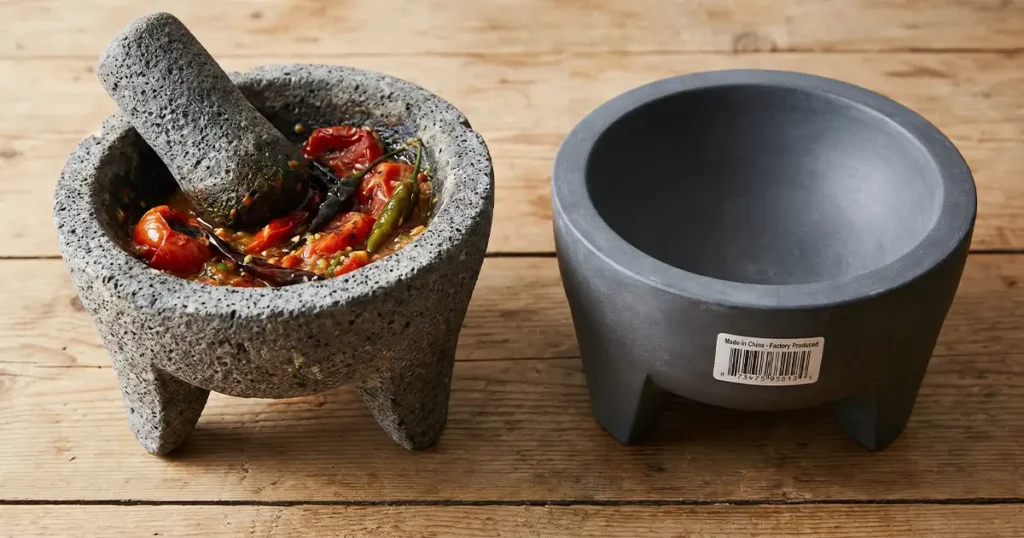
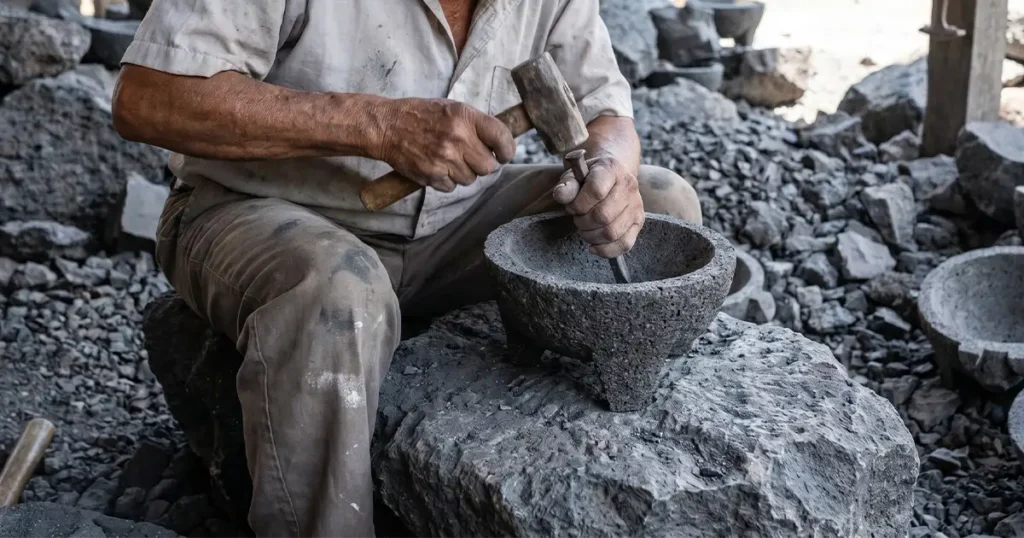
Real molcajetes are carved entirely by hand using a chisel and mallet. Because of this artisanal process, their legs, rims, and bowls will be naturally asymmetrical and slightly imperfect. If you are looking at a perfectly smooth, perfectly symmetrical piece—or a neat stack of identical molcajetes at a big-box store—they were cast in a concrete mold.
6. Beware of Overly Intricate Carvings
Carving lava rock is a physically demanding and restrictive task. If a molcajete is covered in extremely intricate, flawless designs (like perfectly rounded pig heads or deep geometric patterns) being sold at a bargain price, be highly skeptical. Soft stone or fake concrete is much easier and cheaper to sculpt into detailed shapes than genuine, dense basalt.
7. The Paint and Dust Test
Many deceitful manufacturers will paint their concrete products dark grey or black to mimic the natural look of basalt. During your first grind, or even when wiping it heavily with a wet cloth, this paint—or an excessive amount of white, chalky dust—will start to chip off. Real stone maintains its natural, varied color all the way through.
Where Does an Authentic Molcajete Come From?
Genuine, high-quality pieces come directly from the historic volcanic fields of central Mexico. Master artisans in regions like San Nicolás Obispo (Michoacán), Comonfort (Guanajuato), Jalisco, and Puebla spend hours or even days carving a single piece from raw boulders. Understanding the intense labor behind this craft justifies paying the right price and steering clear of suspiciously cheap concrete alternatives.
You Bought the Real Deal. Now What? (How to Cure It)
Even an authentic molcajete cannot be used straight out of the box. You must "season" or cure it to remove any loose grit left over from the carving process:
- Wash: Scrub the bowl thoroughly with water and a stiff brush. Never use soap, as the porous rock will absorb the chemicals and ruin your food's flavor.
- Grind: Dry grind raw white rice in the bowl. Keep grinding, discarding, and replacing the rice until the resulting powder turns from dark grey to pure white.
- Season: Grind a mixture of garlic, rock salt, and spices to seal the pores and prep the stone for its very first real use.
The Verdict: Authentic Volcanic Rock vs. Fake Concrete
When deciding between the two, the differences go far beyond just the price tag. Here is a quick breakdown of what you can expect from each material.
Authentic Volcanic Rock Molcajete
Pros:
Cons
Fake Concrete Replica
Pros:
Cons

The best authentic volcanic stone molcajete in Mexico
Key features:
- Authentic & hand-carved: Crafted from natural volcanic rock from the Popocatépetl volcano in a traditional 8-inch pig design.
- Versatile grinding: The ideal porous surface for making fresh guacamole, authentic salsas, pesto, and pulverizing spices or seeds.
- Generous size: Approximately 8.5" in diameter by 5" tall. Includes a 4" tejolote (pestle).
- Built to last a lifetime: Includes simple curing instructions. The ancient manual grinding method ensures ingredients release their full flavor and aroma profiles.
Frequently Asked Questions (FAQ)
Can you use a concrete molcajete for food?
No. Concrete is not food-safe under friction. Using one means you will end up ingesting toxic cement particles, silica dust, and industrial sealants.
Why is my molcajete turning my guacamole grey?
If you have a real stone, it simply means it hasn't been cured properly yet. However, if you’ve repeatedly cured it following the right steps and it still sheds grey sludge, you are likely dealing with a fake molcajete.
Are real molcajetes completely black?
No, they are rarely pitch black. The color of natural basalt varies from light grey to dark grey depending on its specific mineral content, such as feldspar. If it is jet black, shiny, and uniform, it might be painted concrete.