
Volcanic Rock vs. Granite Molcajete: Which is Best? The Ultimate Guide
- Why Your Molcajete Choice Matters
- What is an Authentic Volcanic Rock Molcajete?
- Why Choose a Granite Molcajete (Mortar and Pestle)?
- The Ultimate Showdown: Volcanic Rock vs. Granite
- Buyer Beware: How to Spot a Fake Volcanic Rock Molcajete
- How to Season (Cure) Your New Molcajete
- Final Verdict: Which Molcajete Should You Buy?
- Frequently Asked Questions (FAQ)
Unlock authentic flavors and transform your cooking with the right molcajete—but beware, the wrong choice can ruin your dishes and even pose health risks!
Why Your Molcajete Choice Matters
Quick Verdict: The FESTMEX Authentic Volcanic Stone Molcajete is a hand-carved, traditional cooking tool made from natural volcanic rock, ideal for extracting authentic flavors and aromas in Mexican cuisine. Its porous surface and heat retention properties make it perfect for experienced cooks seeking to elevate their dishes.
- Authentic Flavor Extraction: Experience unparalleled taste as traditional grinding methods unlock the full essence of your ingredients.
- Durable Craftsmanship: Invest in a timeless kitchen tool, built to last generations, unlike fragile or inferior alternatives.
- Health & Safety First: Avoid dangerous counterfeits and toxic materials that can contaminate your food and compromise your well-being.
- Culinary Versatility: Master everything from vibrant salsas to perfectly ground spices, elevating every dish you create.
What is an Authentic Volcanic Rock Molcajete?
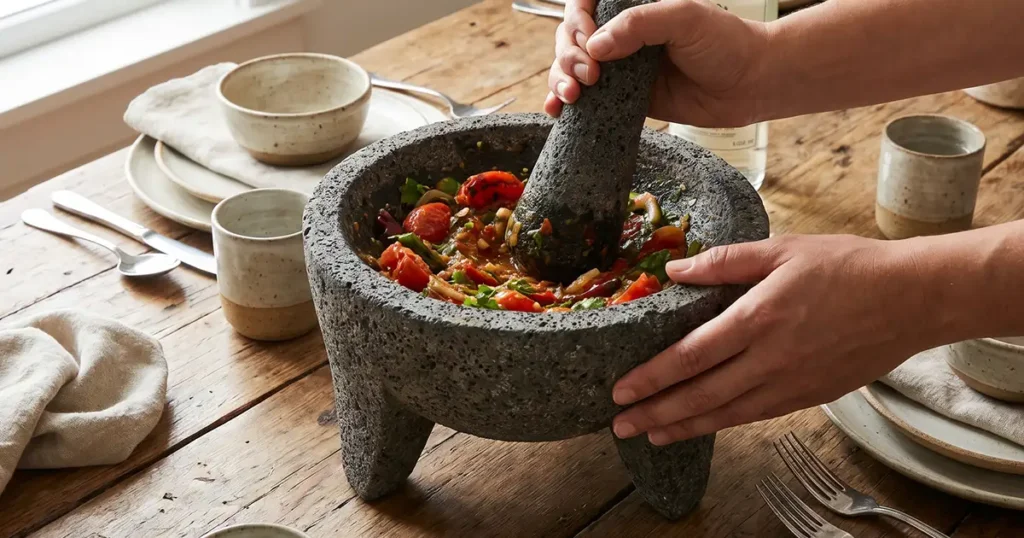
The volcanic rock molcajete has deep roots in Mesoamerica, having been used by civilizations like the Aztecs and Mayans since pre-Hispanic times.
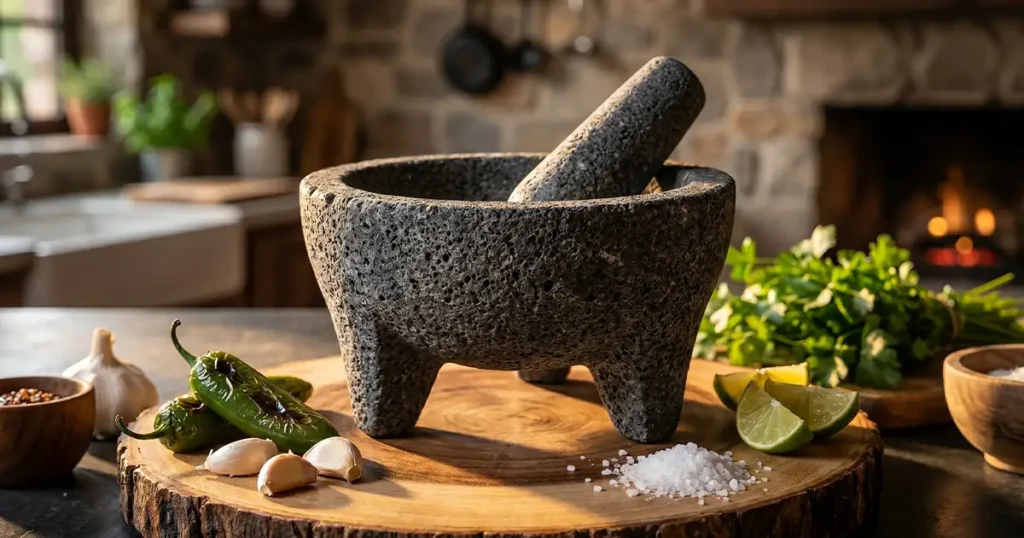
The Science of Volcanic Rock (Basalt): This material features natural pores formed by gas bubbles trapped during the cooling of lava. These pores create the perfect abrasive surface designed to shear and tear the tough skins of chilies and tomatoes, rather than simply crushing them.

FESTMEX Authentic Volcanic Stone Molcajete (Pig Design)
Key features:
- Authentic & hand-carved: Crafted from natural volcanic rock from the Popocatépetl volcano in a traditional 8-inch pig design.
- Versatile grinding: The ideal porous surface for making fresh guacamole, authentic salsas, pesto, and pulverizing spices or seeds.
- Generous size: Approximately 8.5" in diameter by 5" tall. Includes a 4" tejolote (pestle).
- Built to last a lifetime: Includes simple curing instructions. The ancient manual grinding method ensures ingredients release their full flavor and aroma profiles.
Pros
Cons
Why Choose a Granite Molcajete (Mortar and Pestle)?
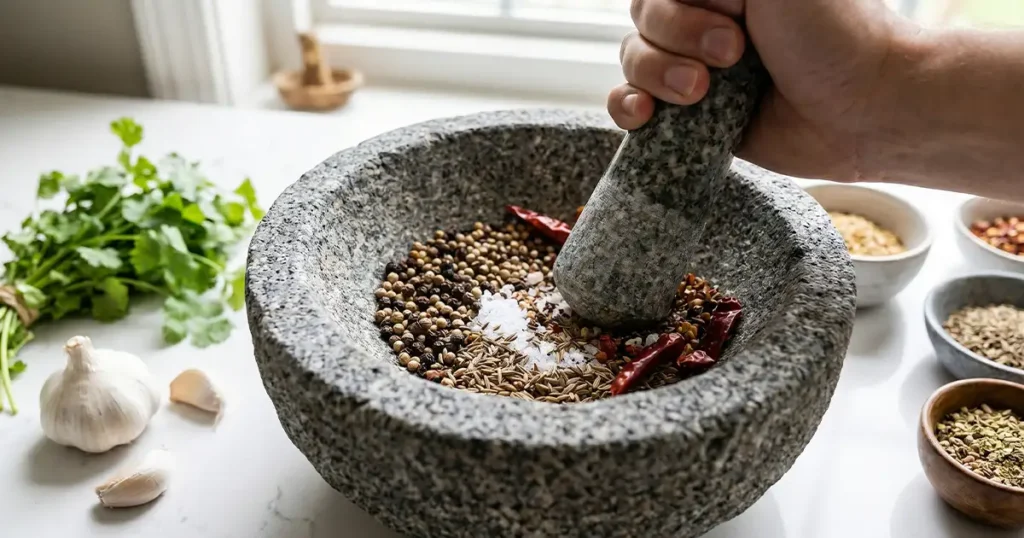
Unpolished granite creates excellent friction, making it an incredibly versatile and efficient tool for crushing a wide variety of ingredients from around the world.

ChefSofi Unpolished Granite Mortar & Pestle Set (2-Cup)
Key features:
- Effortless grinding: Made from unpolished granite, the interior provides the ideal natural friction for quick crushing without wasting time stabilizing the pestle.
- Versatile application: Perfect for pulverizing nuts, seeds, ginger, garlic, and making fresh guacamole, pesto, and salsas.
- Stable & mess-free: The heavy, durable stone construction prevents slipping on your countertop during intense use.
- Generous capacity: Features a practical 2-cup (500 ml) capacity, reducing the need to reload ingredients while cooking.
Pros
Cons
The Ultimate Showdown: Volcanic Rock vs. Granite
Here is a quick breakdown to help you compare the two materials at a glance:
| Feature | Volcanic Rock (Basalt) | Unpolished Granite |
|---|---|---|
| Technique | Best for shearing (a lateral wrist-twisting motion) | Great for both rubbing and heavy pounding |
| Flavor Profile | Absorbs essences and enhances flavor over time | Remains completely neutral; won't hold onto past flavors |
| Cleaning | Hot water and a stiff brush (strictly no soap) | Hot water and a stiff brush (strictly no soap) |
Buyer Beware: How to Spot a Fake Volcanic Rock Molcajete
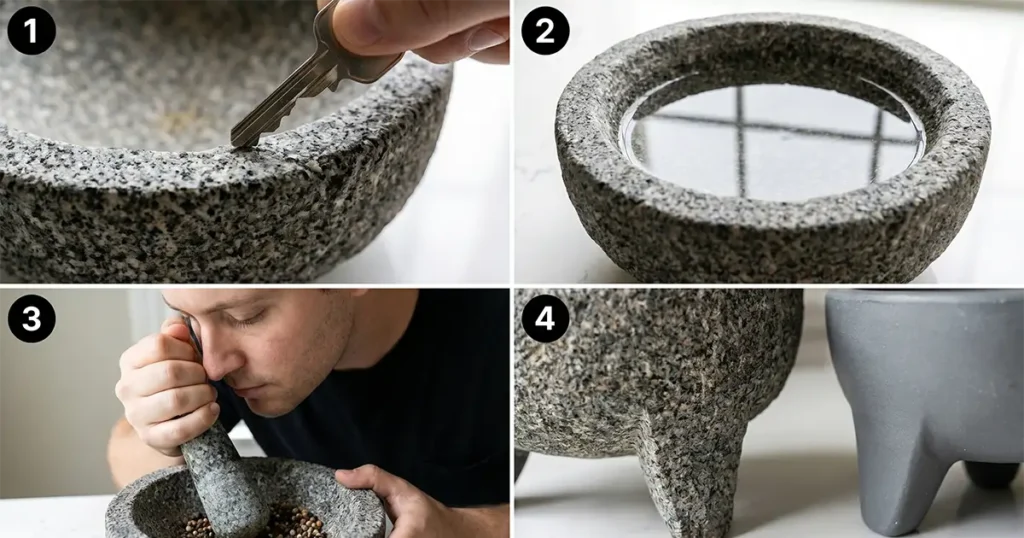
The market is unfortunately flooded with cheap imitations made from cement and gravel poured into molds. These fakes will continually shed toxic sand and concrete dust into your food. Here is how to test your molcajete to ensure it is authentic volcanic rock:
- The Scratch Test: Run a knife or a key firmly across the surface. If it easily leaves a deep, dusty groove, it is made of cement. Real volcanic stone will not scratch easily.
- The Water Test: Pour water into the bowl. An authentic molcajete will hold the water (though very porous ones might drip slightly). Cement will absorb the water evenly and quickly, exactly like a sponge.
- The Smell Test: If it smells like wet concrete or a damp basement when grinding, it is fake. Natural stone usually gives off a slight mineral or sulfur scent when it is brand new.
- The Color and Shape: Do not trust the color alone; volcanic rock ranges from light grey to dark black, and many fakes are simply painted black. Look for imperfections instead. Hand-carved authentic pieces will have slightly irregular shapes and asymmetrical legs. Molded cement pieces will look perfectly uniform.
How to Season (Cure) Your New Molcajete
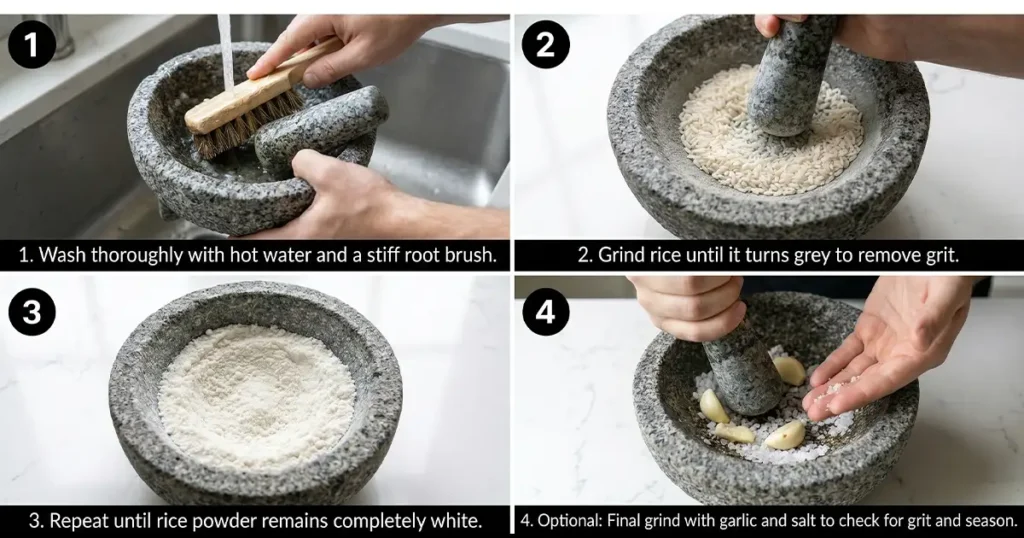
Whether you buy unpolished granite or volcanic rock, both materials must be cured before their first use to remove residual grit and dust.
Step-by-Step Curing Process:
- Wash the bowl and the pestle (tejolote) thoroughly with hot water and a stiff root brush.
- Place a handful of raw white rice into the bowl and grind it, making sure to work the rice over the entire interior surface.
- The rice powder will turn grey as it picks up stone dust. Discard the grey powder and repeat the process. (Note: Volcanic rock may require this to be repeated 4 or more times). Continue until the ground rice powder remains completely white.
- Optional: Do a final grind with a few cloves of garlic and coarse rock salt to check for any remaining grit and to add your very first layer of seasoning.
Final Verdict: Which Molcajete Should You Buy?
Buy a Granite Molcajete if: You cook a wide variety of global cuisines (from Thai curries to Italian pestos), you need to finely grind hard spices, and you prefer a tool that won't hold onto the smell of yesterday's garlic.
Buy a Volcanic Rock Molcajete if: You are a purist when it comes to Mexican cuisine, your main goals are flawless salsas and guacamole, and you want an authentic, artisanal piece that you can pass down to your children.
Frequently Asked Questions (FAQ)
Can you make guacamole in a granite mortar and pestle?
Yes. Unpolished granite provides excellent friction for making guacamole, effectively mashing the avocado while extracting the essential oils and flavors from your onions, cilantro, and jalapeños.
Why does my molcajete smell like cement?
If your molcajete smells like wet masonry or concrete when you add water or start grinding, it is highly likely that it is a cement imitation. These are not food-safe and should not be used for cooking.
Can I use soap to clean my molcajete?
Never. Because both volcanic rock and unpolished granite are porous to varying degrees, dish soap will become trapped in the stone. This will ruin the flavor of your future meals with a soapy, chemical taste. Always stick to hot water and a dedicated scrubbing brush.