Real vs Fake Molcajete Guide: How to Tell Authentic Volcanic Stone from Fake Concrete (2026)
Learn how to tell if a molcajete is authentic volcanic rock or fake concrete. Home tests (acid, water, scratch) to identify real basalt vs counterfeit stone.
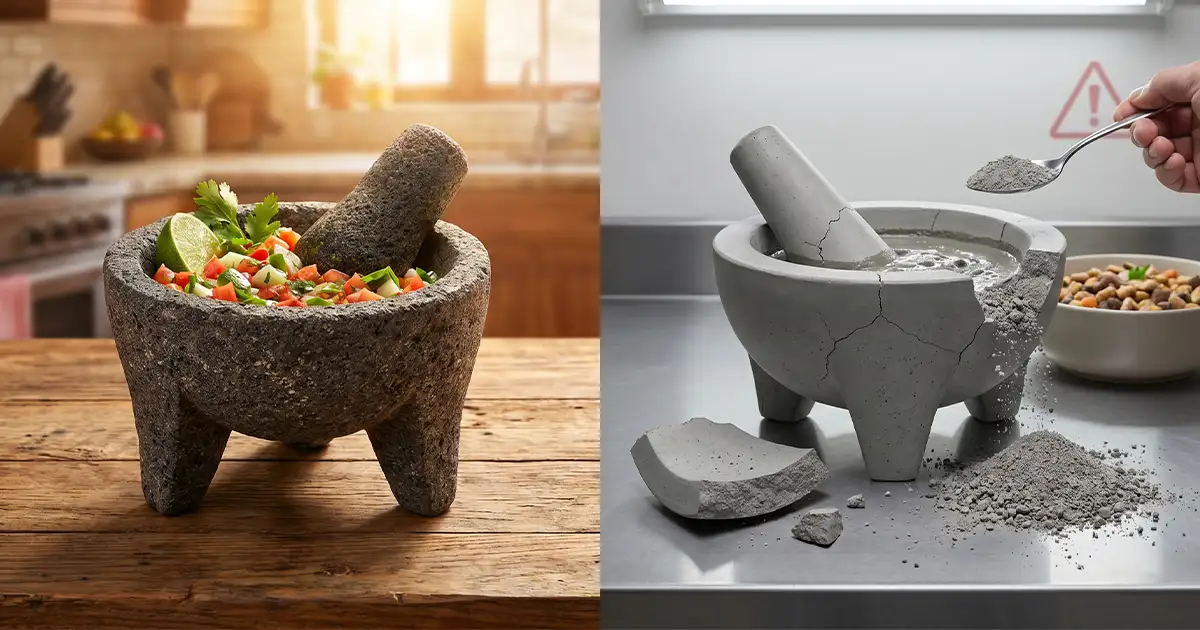
Buying an authentic molcajete is not just about Mexican culinary heritage—it is a critical matter of food safety. In recent years, supermarkets and online marketplaces have been flooded with cheap knockoffs cast from cement, toxic industrial binders, and artificial coloring.
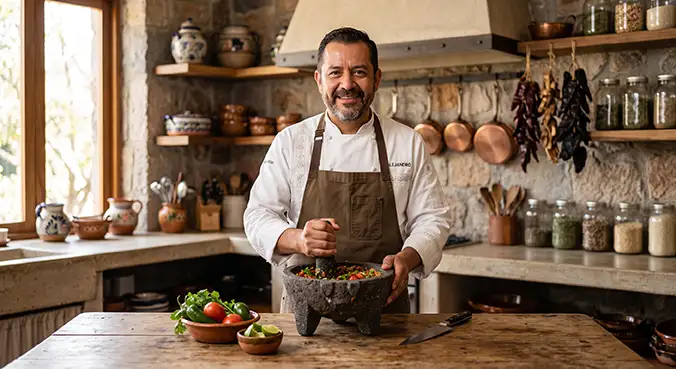
In this guide, Paco Solís breaks down how to spot a fake concrete molcajete and verify that your mortar is 100% genuine volcanic basalt before you ever make salsa or guacamole.
Why Fake Concrete Molcajetes Are Dangerous
Unlike natural volcanic lava rock baked at 2,200 °F deep underground, commercial cement contains dangerous industrial compounds that leach directly into your recipes:
- Respirable Silica Dust: Grinding a tejolote pestle against soft cement releases abrasive crystalline silica into food.
- Chemical Binders & Resins: Fast-curing casting molds use chemical adhesives that dissolve when exposed to acidic tomatoes, limes, and hot peppers.
- Industrial Colorants & Coal Tar: To replicate volcanic dark charcoal hues, manufacturers apply shoe polish, ash, or chemical dyes that transfer into salsas.
Consuming cement aggregates and synthetic adhesives poses serious gastrointestinal risks and causes micro-fractures in dental enamel over time.
7 Foolproof Tests to Verify Your Molcajete
1. The Acid / Vinegar Test (Geologist Test)
Pour a few drops of white vinegar or pure lemon juice into the dry bowl:
Real Volcanic Rock: Completely inert. No bubbling or chemical reaction.
Fake Concrete: Fizzes and releases tiny gas bubbles with a chalky wet-cement odor.
2. The Water Absorption Test
Pour two tablespoons of warm water onto the stone surface:
Real Basalt: Steadily absorbs into the microscopic natural volcanic vesicles.
Concrete / Resin: Water beads up or creates an oily chemical film.
3. The Wet Earth Scent (Petrichor Test)
Dampen the mortar with warm water and smell it:
Real Volcanic: Clean, fresh scent of rich wet minerals and rainfall on earth.
Fake: Harsh industrial odor reminiscent of dry wall, plaster, or masonry mortar.
4. The Raw White Rice Scratch Test
Grind a handful of dry white rice. In genuine volcanic rock, the rice turns grey initially and quickly becomes pure white after 3 to 4 passes. With cement, the rice stays gritty and grey forever.
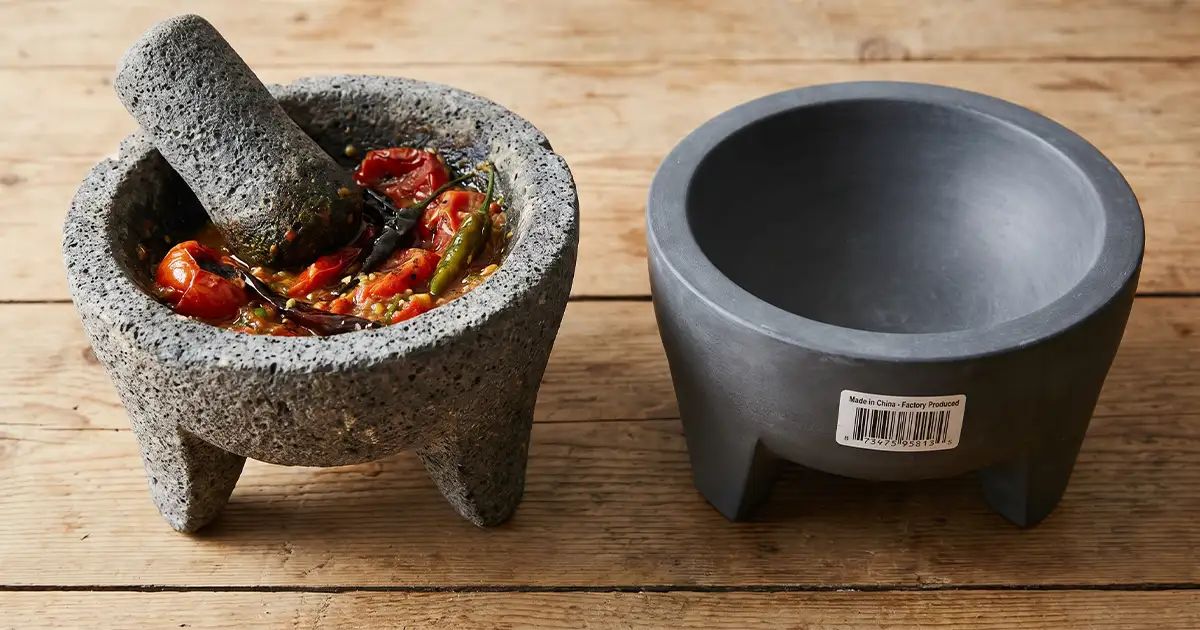
5. Mold Seams and Pore Inspection
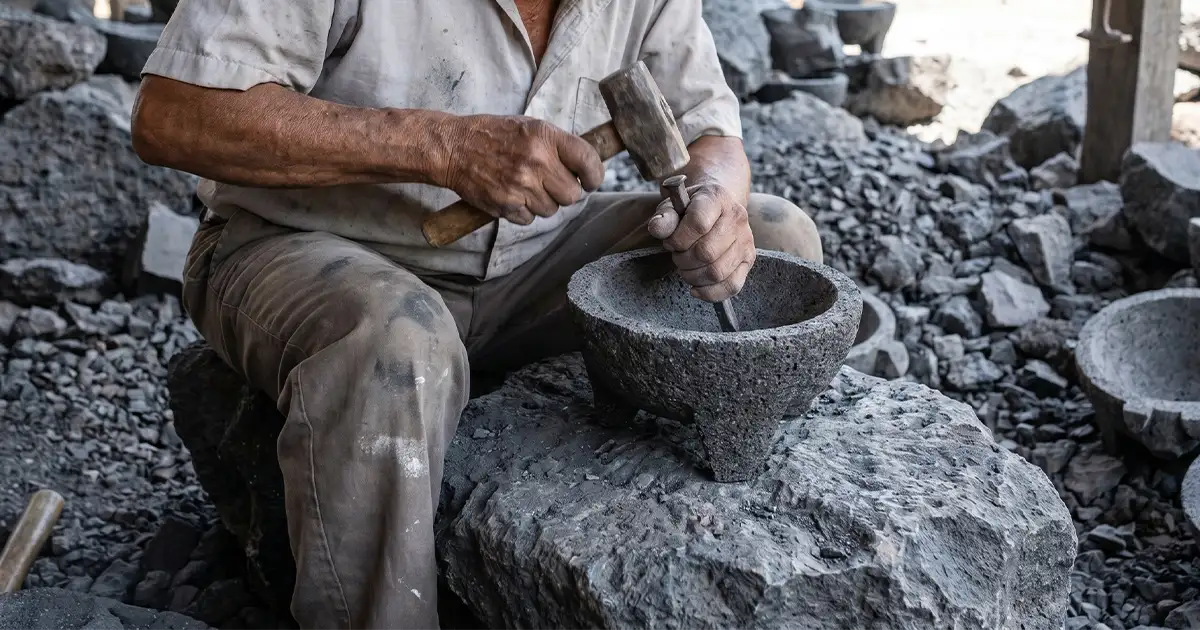
Inspect the bottom feet. If you find a straight casting line or seam, it was made in a factory mold. Real hand-carved molcajetes feature distinct chisel marks and irregular crater textures.
6. Wet Paper Towel Rub Test
Rub a damp white paper towel vigorously inside the bowl. If it turns pitch-black or charcoal grey with grease, the mortar was coated with dye or mineral oil.
7. The Acoustic Coin Ring Test
Tap the outer rim lightly with a heavy coin. Dense natural basalt produces a high-pitch metallic bell tone. Cement aggregates produce a dull, hollow thud.
Real Basalt vs Fake Concrete Comparison Matrix
| Feature | Real Volcanic Molcajete | Fake Concrete Knockoff |
|---|---|---|
| Material Origin | Natural quarried volcanic lava basalt | Crushed sand, gravel & Portland cement |
| Weight & Balance | Heavy, dense, low center of gravity | Lightweight, brittle, tippy base |
| Porosity Pattern | Natural organic craters of varying size | Spherical air bubbles from chemical setting |
| Seasoning / Curing | Seals completely smooth within 3-4 rounds | Sheds grey cement dust indefinitely |
| Food Safety | 100% Non-toxic and inert | Leaches silica, binders, and chemical dyes |
| Lifespan | Heirloom piece lasting 100+ years | Cracks and crumbles under heat or pestle force |
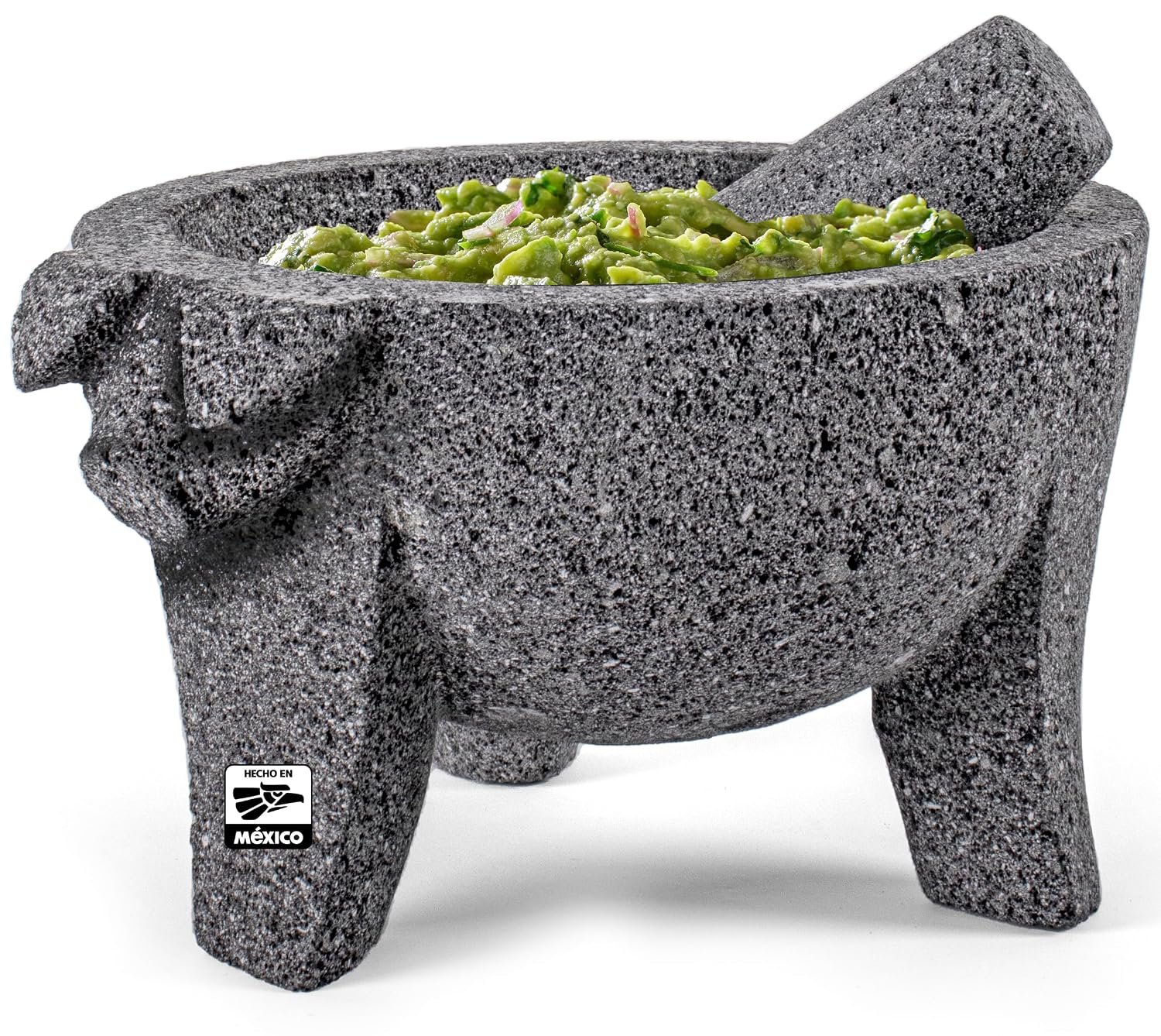
Festmex Authentic Volcanic Stone Molcajete 8" (Traditional Pig Carving)
Hand-chiseled from a single block of natural Mexican volcanic lava basalt. Passes all acid, rice, and acoustic tests with flying colors. Includes heavy tejolote pestle and wood presentation base.
Frequently Asked Questions
What should I do if I already bought a fake concrete molcajete?
Stop using it for food immediately. You can repurpose it as a rustic garden planter or decorative succulent holder. Do not risk eating food ground in synthetic cement.
Are all pig-shaped molcajetes fake?
No! Hand-carved pig head molcajetes (molcajete de cerdito) are a beloved centuries-old Mexican artisan tradition. The difference is hand-chiseling into real volcanic basalt vs pouring cement into a plastic mold.
How much should an authentic volcanic molcajete cost?
An authentic 8-inch handcrafted volcanic molcajete typically ranges from $45 to $85 USD. Beware of units sold for $15–$25 as they are almost certainly cement replicas.
Related Products & Recommended Alternatives

RSVP International Authentic Mexican Molcajete

Made in Mexico Genuine Mexican Manual Guacamole Salsa Maker