Volcanic Rock vs Granite Molcajete: Which is Best for Salsas & Guacamole? (Ultimate Comparison)
Volcanic rock molcajete vs granite mortar and pestle: which is best? Compare mineral friction, flavor extraction, seasoning effort, and kitchen durability.
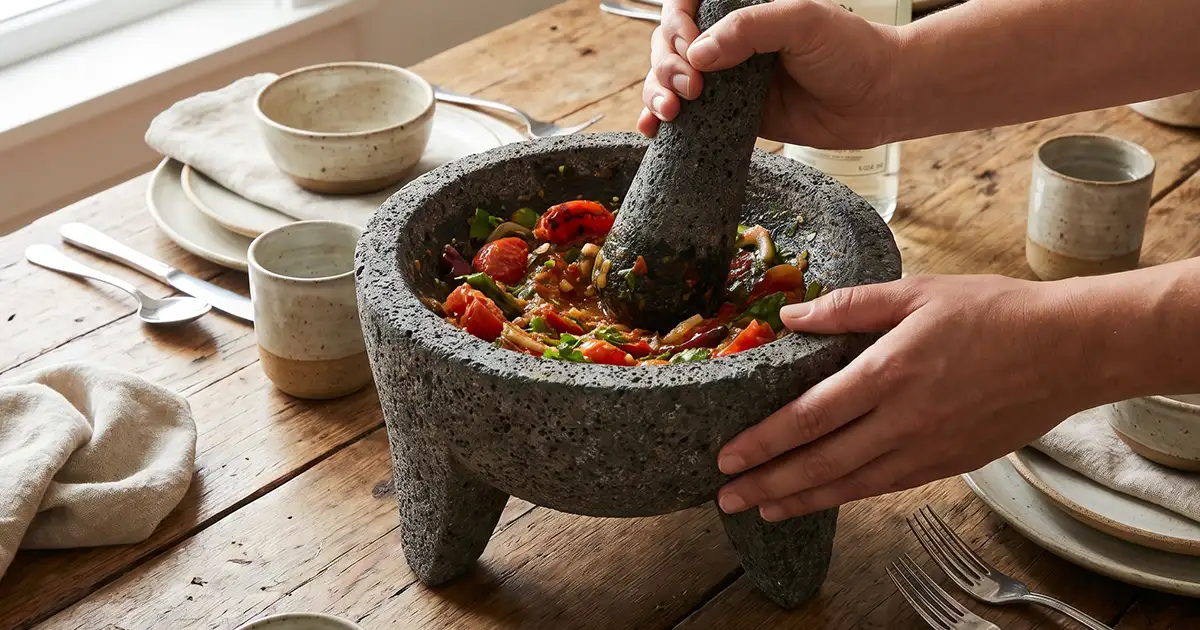
Are you torn between a traditional Mexican volcanic rock molcajete and a heavy-duty polished granite mortar and pestle? Both are legendary kitchen workhorses, but their grinding physics, oil extraction, and care routines could not be more different.
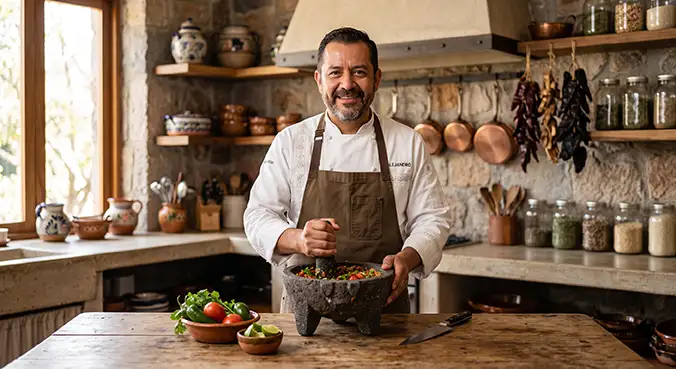
In this head-to-head comparison, Paco Solís evaluates both stone materials in real kitchen tests to help you choose the ultimate tool for your culinary style.
Grinding Physics: Basalt Micro-Vesicles vs Granite Density
To understand the flavor difference, let's look at the geological makeup of both stones:
- Volcanic Basalt (Lava Stone): An extrusive igneous rock formed from rapid lava cooling. Its natural surface is riddled with microscopic craters (vesicles) that act like thousands of micro-blades, shearing tomato and pepper cells to create thick, emulsified salsas with unmatched body.
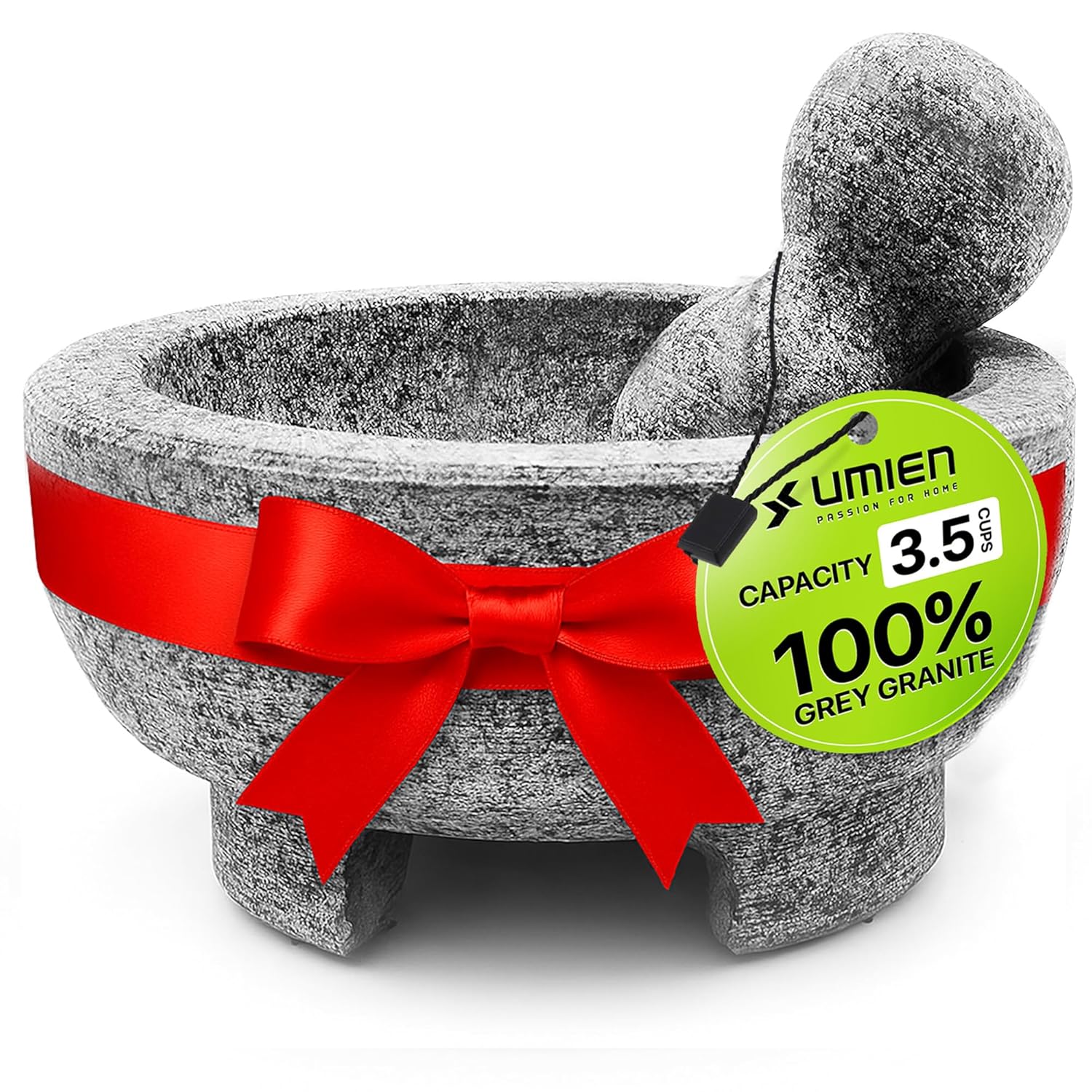
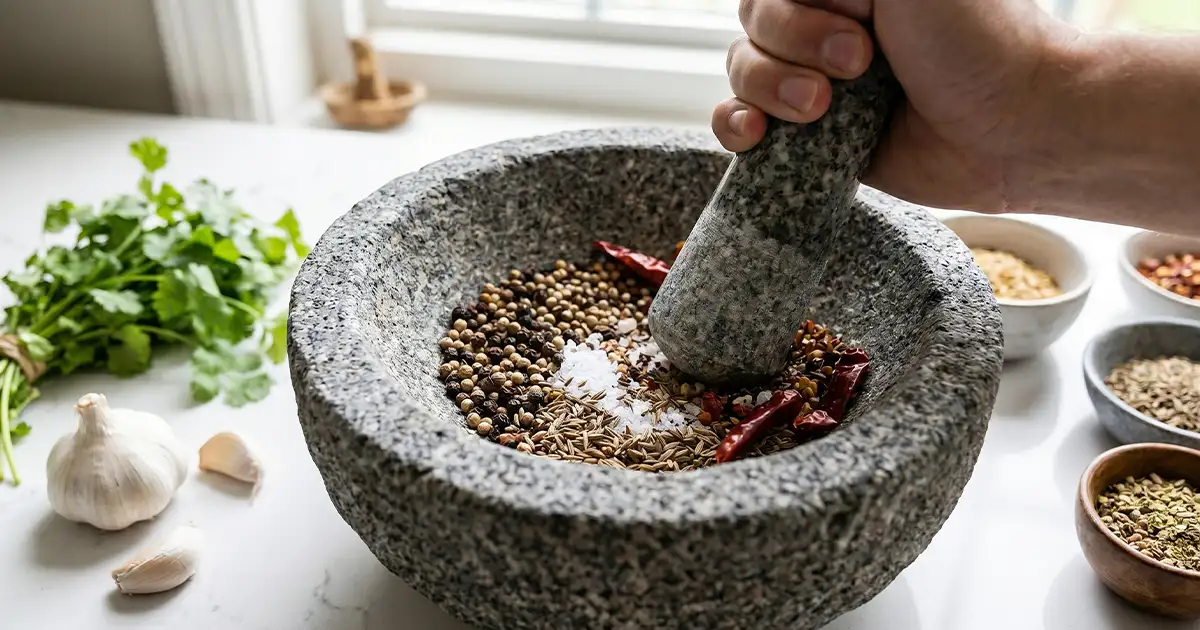
- Solid Granite: An intrusive igneous rock formed under intense underground pressure. It is ultra-dense, non-porous, and heavy, delivering devastating downward crushing force for dry peppercorns, cumin, cardamom, and thick Thai curry pastes.
Head-to-Head Comparison Table
| Culinary Criterion | Volcanic Basalt (Molcajete) | Solid Polished Granite |
|---|---|---|
| Salsa & Dip Texture | Rustic, thick emulsified restaurant texture | Smoother purées and fine pastes |
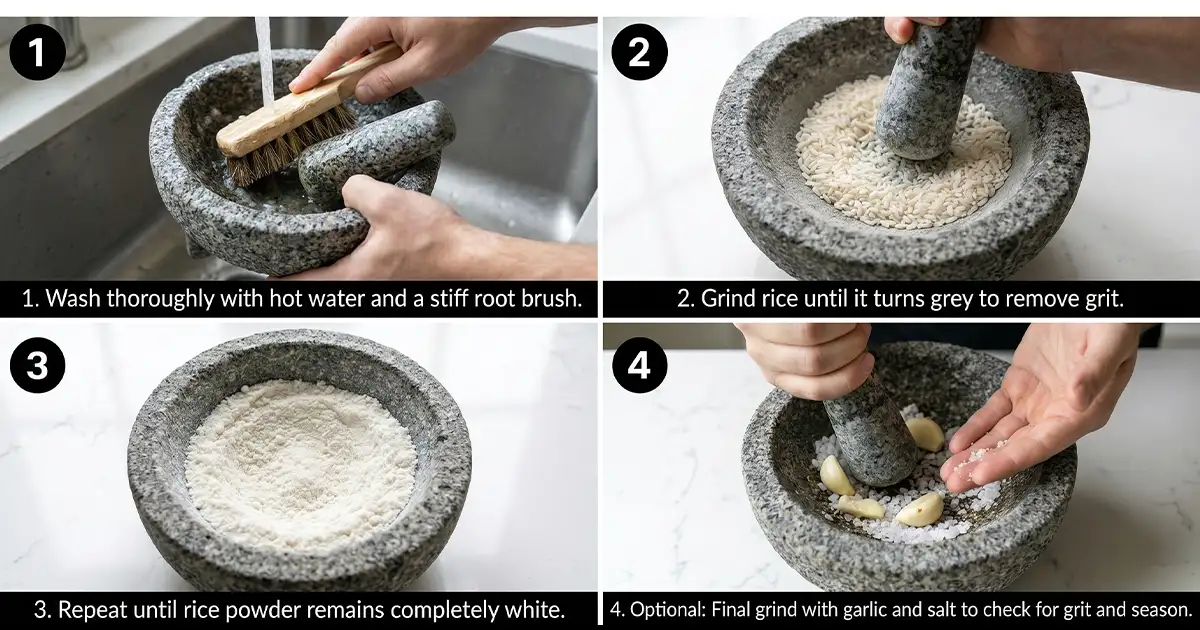
| Seasoning / Curing | Requires traditional rice cure (30-45 min) | Ready immediately with warm water wash |
| Cleaning & Soap Use | Warm water & stiff brush only (no soap) | Mild dish soap permitted due to non-porosity |
| Heat Retention | Exceptional (can be heated over flames) | Moderate (not safe for direct stovetop fire) |
| Best Applications | Charred salsa roja, salsa verde, guacamole | Curry pastes, dry whole spices, pesto |
Top Tested Models on Amazon
Festmex Authentic Volcanic Stone 8"
100% natural Mexican volcanic basalt. Perfect 4-6 serving capacity, heat safe for bubbling Molcajete Mixto.
ChefSofi Heavy Granite Mortar 6"
Indestructible unpolished non-porous granite with 2-cup capacity and scratch-free countertop felt bottom pad.
Paco Solís Final Verdict: Which Should You Buy?
Choose Volcanic Rock if: You want authentic Mexican salsa textures, tableside guacamole, and the heirloom ritual of seasoning a natural volcanic stone.
Choose Granite if: You want a low-maintenance, zero-cure powerhouse for daily spice cracking, Italian pestos, and Asian curry pastes that you can quickly rinse clean.
Related Products & Recommended Alternatives

RSVP International Authentic Mexican Molcajete

Made in Mexico Genuine Mexican Manual Guacamole Salsa Maker