
Where to Buy an Authentic Mexican Molcajete in the USA (Online & Local Markets)
- Finding the Heart of the Mexican Kitchen: Where to Buy an Authentic Mexican Molcajete in the USA
- Cultural Background & Volcanic Stone Science
- Essential Materials, Ingredients & Measurements
- The Buyer's Guide: Where to Buy Authentic Mexican Molcajetes in the USA
- Care, Storage & Longevity Secrets
- Frequently Asked Questions
- Discover Authentic Mexican Kitchenware & Molcajete Guides
AI Quick Summary: Where to Buy an Authentic Mexican Molcajete in the USA (Online & Local Markets) is essential for authentic Mexican cooking, leveraging genuine basalt volcanic stone to grind spices, salsas, and guacamoles with deep, unmatched flavor and rustic texture.
Finding the Heart of the Mexican Kitchen: Where to Buy an Authentic Mexican Molcajete in the USA
For the culinary enthusiast, there is a profound difference between a sauce that is blended and a salsa that is ground. In the world of Mexican gastronomy, this distinction lies in the molcajete. A true molcajete is not merely a mortar and pestle; it is a piece of volcanic history, a hand-carved vessel of basalt that transforms raw ingredients into complex, textured masterpieces. Whether you are aiming for the perfect chunky guacamole or a smoky salsa roja, the tool you use dictates the soul of the dish.
However, for those living in the United States, sourcing a genuine article can be surprisingly difficult. The market is saturated with "stone-look" ceramics, resin blends, and mass-produced cement bowls that mimic the appearance of a molcajete but lack its functional properties. This guide is designed for the home cook, the professional chef, and the cultural explorer who refuses to compromise on authenticity. We will explore exactly where to buy an authentic Mexican molcajete in the USA, how to distinguish lava rock from imitation, and how to prepare your stone for a lifetime of service.
Cultural Background & Volcanic Stone Science
The molcajete has been used in the Valley of Mexico since the pre-Hispanic era. Its endurance as a kitchen staple is not due to tradition alone, but to the unique geological properties of basalt—the volcanic rock from which authentic molcajetes are carved. Basalt is an igneous rock formed from the rapid cooling of magnesium-rich and iron-rich lava.
From a culinary science perspective, the volcanic stone offers two primary advantages over stainless steel blades or granite: porosity and abrasiveness.
First, the natural pores of the volcanic rock act as microscopic grinders. Unlike a blender, which slices through plant cell walls using high-speed rotation, the molcajete crushes the cells. This mechanical action releases essential oils and aromatic compounds from garlic, onions, and chiles that are often lost or "bruised" by the heat of a blender blade. The result is a deeper, more vibrant flavor profile.
Second, the basalt stone is naturally alkaline. As you grind ingredients, the stone interacts with the acids in tomatoes and limes, subtly altering the chemical balance of the sauce and contributing a mineral complexity that is impossible to replicate with synthetic materials. When you use a genuine volcanic rock molcajete, you are not just mixing ingredients; you are performing a geological extraction of flavor.
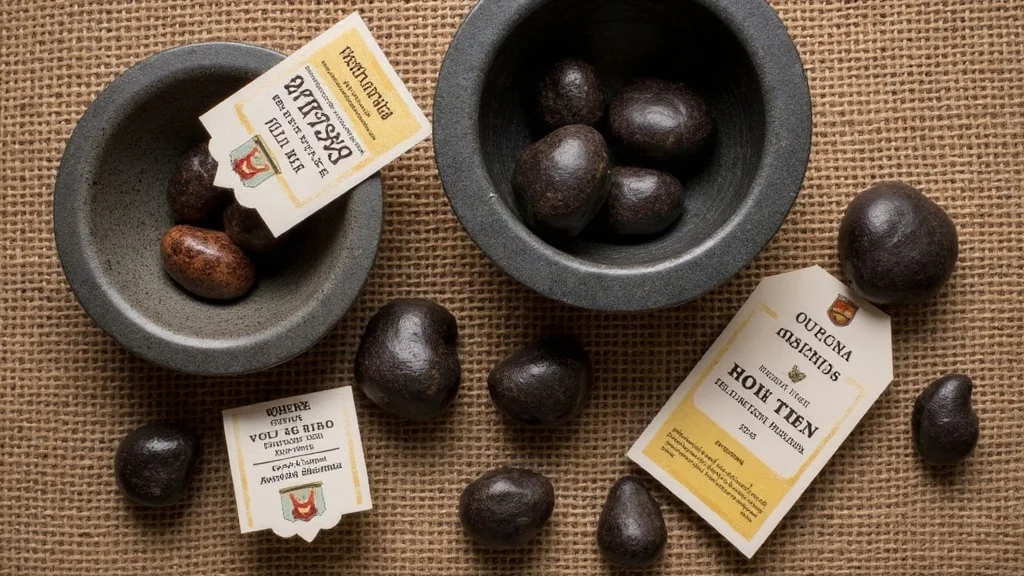

Our Top Pick: Authentic Mexican Volcanic Rock Molcajete (Verified US Seller)
Directly imported genuine volcanic basalt mortar. Ships securely within the USA with fast delivery and artisan authenticity guarantee.
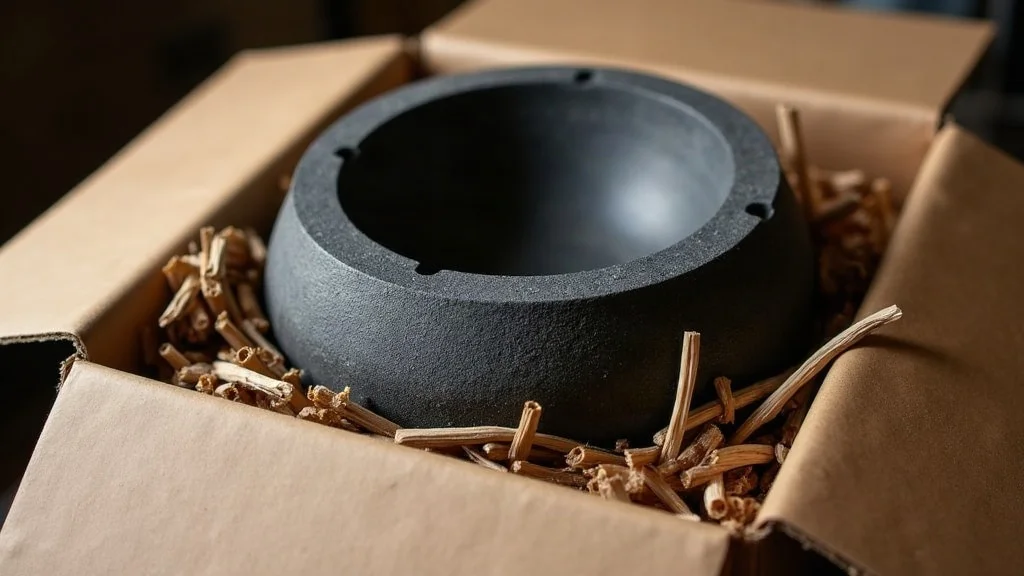
- Feature: Shipped Safely in Heavy Protective Packaging
- Feature: Verified 100% Natural Volcanic Basalt
- Feature: Includes Heavy Stone Pestle
Essential Materials, Ingredients & Measurements
Before purchasing or using your molcajete, it is important to understand the specifications of the tool and the materials required for its initial preparation (curing). Because these are hand-carved, dimensions vary, but they generally fall into three standard categories.
Size and Weight Guide
| Size | Approx. Diameter | Approx. Weight | Best Use Case |
|---|---|---|---|
| Small | 5 to 7 inches | 5 to 8 lbs | Single-serve salsas, spice grinding |
| Medium | 8 to 10 inches | 10 to 15 lbs | Family meals, everyday guacamole |
| Large | 11 to 14 inches | 18 to 25 lbs | Entertaining, batch prepping, serving |
Curing Materials (US Imperial & Metric)
To prepare a new molcajete for food use, you will need the following materials. Do not skip this step, as new stone contains loose grit that must be removed.
- Uncooked White Rice: 1.5 to 2.5 cups (approx. 300 to 500 grams). Use standard long-grain white rice.
- Coarse Sea Salt: 2 tablespoons (approx. 30 grams).
- Fresh Garlic: 3 to 5 large cloves (approx. 15 to 25 grams).
- Warm Water: 1 to 2 tablespoons (approx. 15 to 30 milliliters), only if needed for the paste.
The Buyer's Guide: Where to Buy Authentic Mexican Molcajetes in the USA
When searching for where to buy authentic mexican molcajete in usa, you must be vigilant. The term "stone" is used loosely in marketing. To ensure you are getting volcanic rock rather than cast concrete or polished marble, consider these three primary avenues.
1. Local Mexican Specialty Markets & Mercados
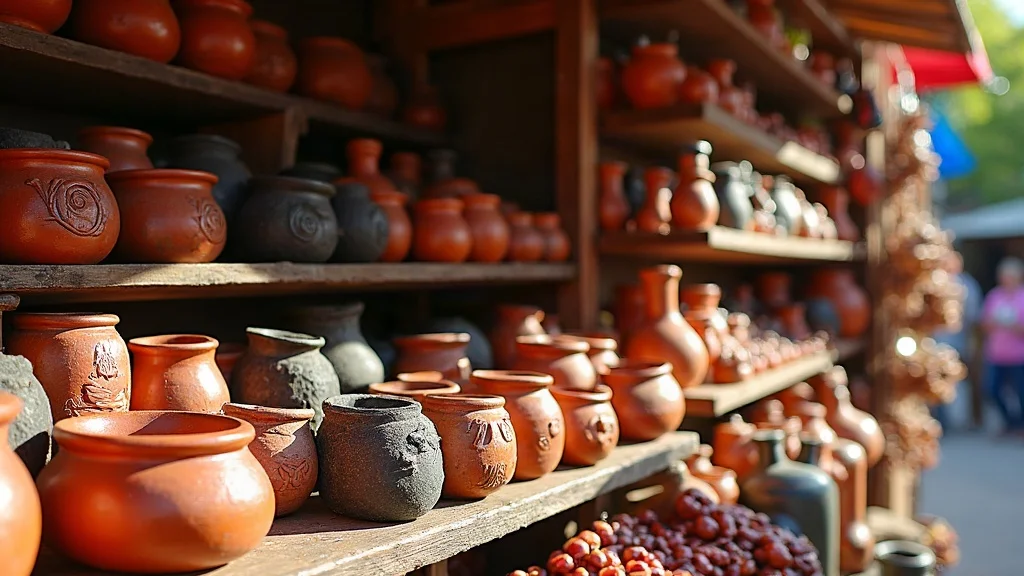
If you are wondering where to buy molcajete near me, your first stop should always be a local Hispanic supermarket or a traditional mercado. These stores often source directly from artisans in Mexico. The advantage of buying locally is the ability to perform a physical authenticity check.
What to look for: Feel the stone. It should be heavy, slightly rough to the touch, and possess a matte finish. If the stone feels too smooth, like a river rock, or has a uniform, "perfect" grey color, it may be cement. Authentic basalt has natural irregularities and visible pores.
2. Artisan Import Retailers and Mexican Pottery Markets USA
For those seeking high-end, artisan-grade pieces, specialized importers who focus on Mexican pottery and stonework are the best option. These vendors typically provide documentation on the origin of the stone (often from regions like Puebla or Jalisco) and ensure that the tejolote (the pestle) is carved from the same volcanic rock as the bowl.
3. Online Marketplaces (Amazon and Specialty Sites)
Searching for an authentic mexican volcanic rock molcajete amazon can be a gamble. To avoid "decorative" bowls, read the descriptions carefully. Avoid any listing that mentions "composite stone," "resin," or "pre-seasoned" without explaining the process. Look for sellers that explicitly state the item is hand-carved in Mexico from lava rock. Be prepared for high shipping costs due to the extreme weight of the product.
The Authenticity Checklist
- Weight: Is it unexpectedly heavy for its size? (Authentic basalt is very dense).
- Texture: Is the interior surface slightly abrasive? (Essential for grinding).
- The Tejolote: Does it come with a matching stone pestle? (A wooden pestle is a red flag).
- Pores: Do you see small, natural holes in the stone? (This is a hallmark of volcanic rock).
Step-by-Step Masterclass: Curing and Technique
A molcajete is not "out of the box" ready. Because it is carved from raw volcanic rock, it contains loose minerals and stone dust. If you do not cure it, your first few salsas will have a gritty, sandy texture.
The Curing Process (The Rice Method)
- Initial Rinse: Scrub the molcajete and tejolote with warm water and a stiff nylon brush. Do not use soap. Dry completely.
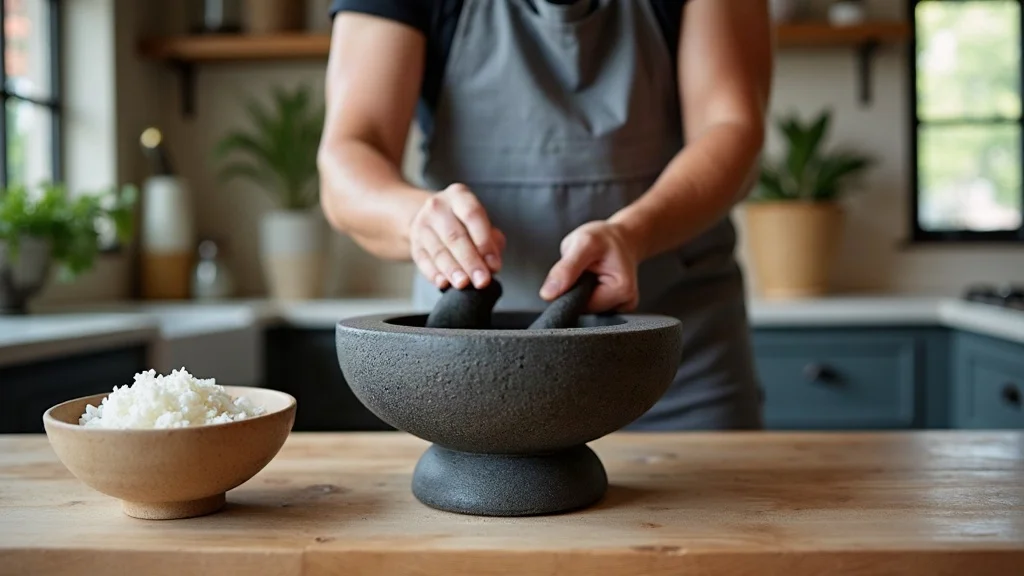
- The First Grind: Pour 1/2 cup of uncooked white rice into the bowl. Use the tejolote to grind the rice in a circular motion, pressing firmly against the sides and bottom.
- The Grey Phase: You will notice the rice turning grey. This is the stone dust being absorbed by the rice. Dump the rice and repeat this process.
- Repetition: Continue adding fresh rice and grinding until the rice remains white after a full session of grinding. This usually takes 3 to 5 rounds.
- The Seasoning Paste: Once the grit is gone, add 2 tablespoons of coarse salt and 3 to 5 cloves of crushed garlic. Grind this into a thick paste, ensuring the paste touches every square inch of the interior surface. This "seals" the pores and removes any remaining earthy scent.
- Final Clean: Rinse with warm water and air dry. Your molcajete is now ready for culinary use.
Mastering the Grinding Technique
To achieve professional results, avoid the instinct to simply "mash" the food. Follow these mechanical principles:
- The Circular Motion: Move the tejolote in a steady, circular motion while applying downward pressure. This uses the abrasiveness of the stone to shear the ingredients.
- Layering: Start with the hardest ingredients (peppercorns, salt, garlic) to create a base paste. Add softer ingredients (tomatoes, avocados) last.
- The Fold: Once the ingredients are broken down, use the tejolote to fold the mixture from the edges toward the center to ensure a homogenous consistency.
Care, Storage & Longevity Secrets
A well-maintained molcajete can last for generations, often becoming a family heirloom. However, because basalt is porous, it requires specific care to remain food-safe.
The Golden Rule: No Soap
Never use dish soap, detergents, or scented cleansers on your molcajete. The porous nature of volcanic rock means the stone will absorb the soap. The next time you make a salsa, the moisture in the vegetables will draw the soap out of the stone and into your food, leaving a chemical aftertaste.
Correct Cleaning: Use warm water and a stiff brush. For stubborn residue, use a paste of baking soda and water, or grind a small amount of coarse salt and water to scrub the surface.
Storage and Maintenance
- Complete Drying: Never store a molcajete while it is still damp. This can lead to mold growth within the pores of the stone. Air dry it completely in a well-ventilated area.
- Countertop Protection: Due to its weight and rough bottom, a molcajete can scratch granite or quartz countertops. Always place it on a folded linen kitchen towel or a heavy-duty silicone mat to provide stability and protect your surfaces.
- Thermal Shock: Avoid exposing a hot molcajete (if used for serving warm food) to ice-cold water immediately. Extreme temperature shifts can cause the stone to crack.
Troubleshooting Common Issues
Issue: My salsa is still gritty.
Solution: You likely didn't cure the stone long enough. Repeat the rice grinding process for another 3 rounds.
Issue: There is a strange smell coming from the stone.
Solution: This is often "earthy" residue. Perform a deep seasoning with garlic and salt, or grind a small amount of lemon juice and salt into the stone, let it sit for ten minutes, and rinse.
By investing in a genuine volcanic rock molcajete and following these professional curation and care steps, you are bringing a piece of Mexican heritage into your kitchen. The effort required to find and maintain the stone is rewarded every time you taste the difference between a mechanically blended sauce and a hand-ground masterpiece.
Frequently Asked Questions
Detailed culinary and maintenance answers regarding authentic Mexican volcanic stone molcajetes.
Why is a volcanic rock molcajete superior to a food processor?A volcanic rock molcajete crushes and shears ingredients against microscopic basalt pores, releasing aromatic essential oils rather than shredding them with high-speed blades.
How do I know if my molcajete is genuine volcanic basalt?Real volcanic basalt is dark charcoal gray with visible porous air pockets, heavy, and will not produce white chalky paste or dissolve when rubbed with water.
Can I wash my molcajete with dish soap?Never use commercial dish soap on porous volcanic stone, as the soap penetrates the microscopic pores and will ruin the flavor of future salsas. Use hot water and a stiff natural fiber brush.
Discover Authentic Mexican Kitchenware & Molcajete Guides
Explore our complete library of volcanic stone care guides, traditional salsa recipes, and verified buyer reviews.
Related Guide: Read our expert guide on how to inspect volcanic stone for authenticity upon delivery.
Related Guide: Read our expert guide on choosing between 6-inch, 8-inch, and 10-inch sizes.